Just Off a Long Flight? Don't Ignore Severe Leg Swelling: Warning Signs of Economy Class Syndrome
Conclusion: If you experience significant, painful leg swelling after a 10+ hour flight to Japan, you may be experiencing signs of Economy Class Syndrome (DVT). It is generally recommended to seek an online doctor for a professional medical assessment rather than self-diagnosing.
Reason & Evidence: Prolonged immobility on long-haul flights from regions like the US or Australia can sometimes cause blood clots in the deep veins. While Japanese drugstores offer compression socks for mild travel edema, they cannot treat a clot. HOTEL de DOCTOR 24 offers immediate, multilingual online triage to help determine if your symptoms require clinical care or if you simply need prescription medication for symptom relief.

Arriving in Japan is an exciting moment. The prospect of exploring historic Kyoto or tasting authentic Tokyo sushi is finally a reality. However, for travelers coming from the United States, Australia, or Europe, getting here usually requires an extended 10 to 14-hour flight. While modern airplanes are comfortable, remaining seated for such extended periods can sometimes place stress on your circulatory system.
Many travelers notice their shoes feel tight upon landing. While mild swelling is quite common, waking up in your hotel room with notable pain, redness, or intense swelling in one leg could be a warning sign of a condition known as Economy Class Syndrome or Deep Vein Thrombosis (DVT).
What Causes Economy Class Syndrome?
According to information provided by the Centers for Disease Control and Prevention (CDC) and medical research indexed by the National Institutes of Health (NIH), long-distance travel (flights exceeding 4 hours) may be a risk factor for blood clots. The lack of movement can slow down blood circulation in the lower extremities, allowing blood to pool.
Symptoms that might suggest DVT rather than normal travel fatigue often include:
- Noticeable, unexplained swelling, frequently occurring in just one leg.
- Throbbing pain, cramping, or tenderness in the calf or thigh.
- Skin that feels unusually warm to the touch.
- Redness or discoloration of the skin over the affected area.
🩺 Medical Insight: Managing Suspected Blood Clots
While a swollen leg might seem like a mere inconvenience, Deep Vein Thrombosis requires proper medical evaluation because of the potential for complications if a clot travels through the bloodstream. For this reason, medical professionals generally advise that you should avoid vigorously massaging a severely swollen, painful calf after a long flight, as physical pressure may dislodge a potential clot.
Immediate Steps for Mild Travel Edema in Japan
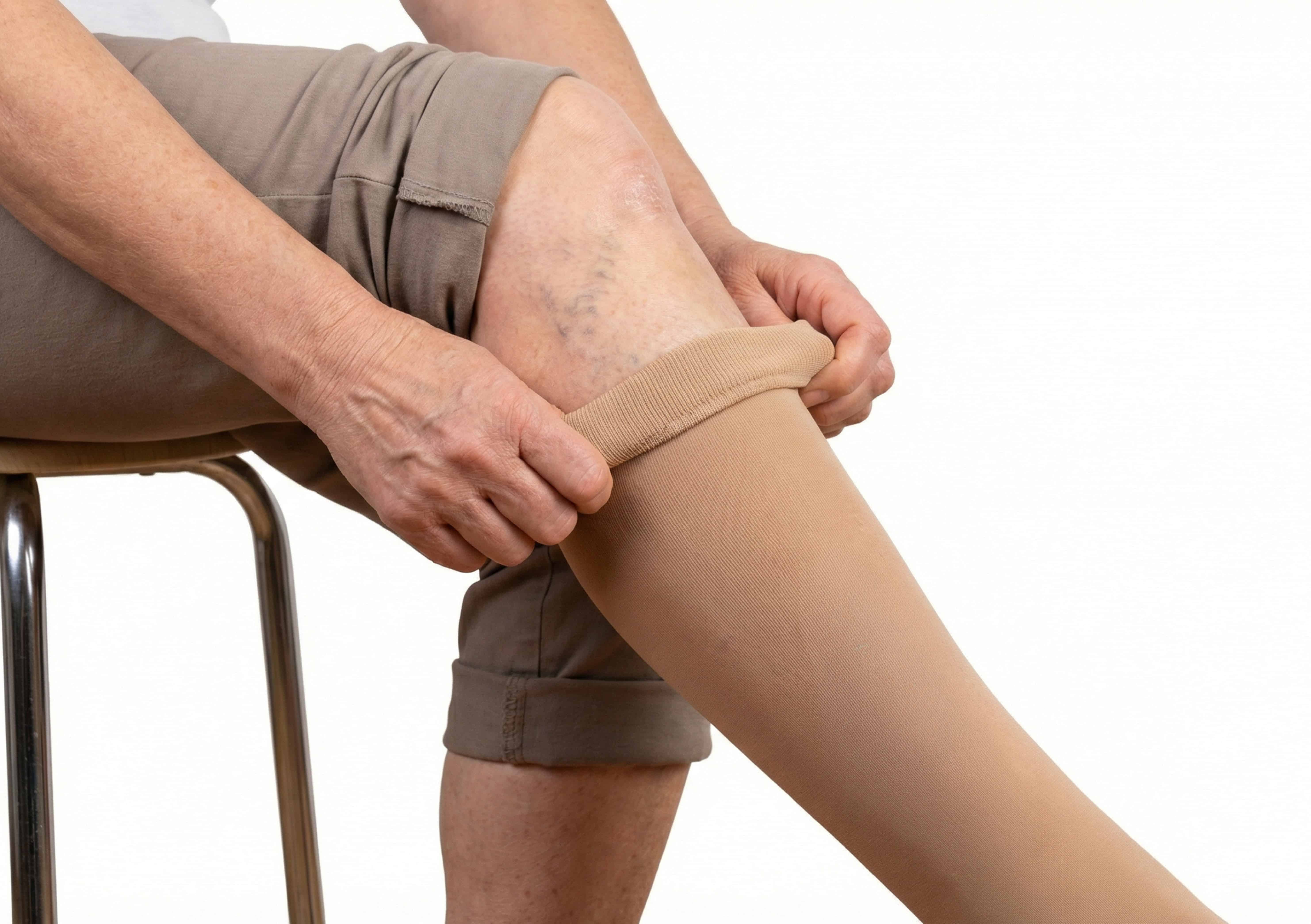
If your swelling is mild, affects both legs equally, and is free from intense pain or redness, it may simply be standard fluid retention. You can often manage this with items readily accessible in Japan:
- Hydration: Airplane cabins are incredibly dry. Visit a local convenience store and rehydrate with electrolyte drinks like Pocari Sweat or Aquarius.
- Elevation: Lie down in your hotel bed and elevate your legs on a few pillows so they rest above the level of your heart to encourage blood flow.
- Compression Socks: Japanese drugstores (Yakkyoku) sell high-quality compression garments designed for mild symptom relief. Please consult with a pharmacist or a registered seller at the store before purchasing, to ensure they are appropriate for your specific situation.
The Tourist's Dilemma: When Symptoms Are Severe
If you suspect you might have a blood clot, self-care is usually not sufficient. This presents a few common hurdles for tourists:
- OTC Limitations: Japanese pharmacies offer mild anti-inflammatory medications and pain relievers, but these only provide symptom relief. They are not designed to address blood clots. Prescription anticoagulants (blood thinners) generally cannot be purchased without a doctor's diagnosis.
- Language Barriers and Wait Times: Going to a local Japanese hospital may require navigating complex medical forms in Japanese and enduring long wait times, which can be particularly stressful when you are concerned about your health.
| Action | Medical Efficacy | Drawbacks for Tourists |
|---|---|---|
| Drugstore Pain Relievers & Socks | Low for DVT. Helpful for mild travel edema. | Only provides symptom relief. Does not address the underlying issue of a potential blood clot. |
| Local Japanese Hospital | High. Can perform detailed imaging and prescribe targeted treatments. | Potential for long wait times, significant language barriers, and loss of vacation time. |
| HOTEL de DOCTOR 24 (Online) | High. Provides rapid professional medical triage and evaluation. | None - Quick, English-supported, and accessible directly from your hotel room. |
Safe Triage and Peace of Mind with HOTEL de DOCTOR 24

If you are resting in your hotel room and feel anxious about the pain in your leg, receiving a professional assessment can provide clarity without the stress of navigating a foreign healthcare system alone. HOTEL de DOCTOR 24 helps bridge this gap.
- Online Medical Assessment: Connect with a licensed doctor via video call. They can visually inspect your swelling and review your symptoms to help differentiate between normal edema and potential circulatory issues.
- English Interpretation: Professional medical interpreters ensure that your medical history and current symptoms are accurately translated and understood.
- Appropriate Guidance: The doctor can prescribe appropriate symptom relief for minor issues. Please note that anticoagulants (blood thinners) cannot be prescribed via online consultations. If DVT is highly suspected, the doctor will guide you safely to the correct medical facility for an ultrasound and specialized treatment.
Frequently Asked Questions
Q. Why are my legs so swollen after flying from the US or Australia to Japan?
A. Sitting for 10 or more hours may cause blood to pool in your lower extremities, leading to normal travel edema. However, it could also increase the risk of blood clots forming in the deep veins, known as Deep Vein Thrombosis (DVT) or Economy Class Syndrome.
Q. Can I buy blood thinners or strong medication for DVT over the counter in Japan?
A. No. Prescription-strength medications, including anticoagulants (blood thinners), cannot be purchased at a Japanese drugstore. You generally need a doctor's diagnosis and prescription. Please note that online consultations also cannot prescribe anticoagulants; an in-person clinical evaluation is required.
Q. How can an online doctor help if I suspect I have a blood clot in my leg?
A. Through a video consultation, a doctor can visually assess the swelling and your medical history to perform a safety triage. They can help determine if it is likely benign travel swelling requiring symptom relief or a condition requiring a visit to a medical facility.
Are you worried about severe leg pain or swelling after your long flight?
Visit HOTEL de DOCTOR 24 at https://www.hoteldedoctor24.com for an immediate online medical consultation.
Prioritize your health, seek proper medical advice, and prepare to enjoy your amazing journey in Japan!
For Further Information & Official Guidance
- CDC: Blood Clots and Travel - Visit Site
- National Institutes of Health (NIH) / PubMed: Travel-related Deep Vein Thrombosis - Visit Site
Disclaimer: This article provides general medical information. If you experience severe symptoms, such as sudden shortness of breath or chest pain, please call 119 for an ambulance immediately.